
Shoulder pain can be a frustrating hindrance, limiting movement and interfering with daily activities. Because the shoulder relies so heavily on the surrounding muscles and tendons for stability, it’s particularly vulnerable to injury when those structures are weak, overloaded or functioning poorly.
At Peak Motion, we assess shoulder pain thoroughly, identify the specific structures involved and build a treatment plan that restores function and rebuilds the strength that keeps the shoulder stable long term.
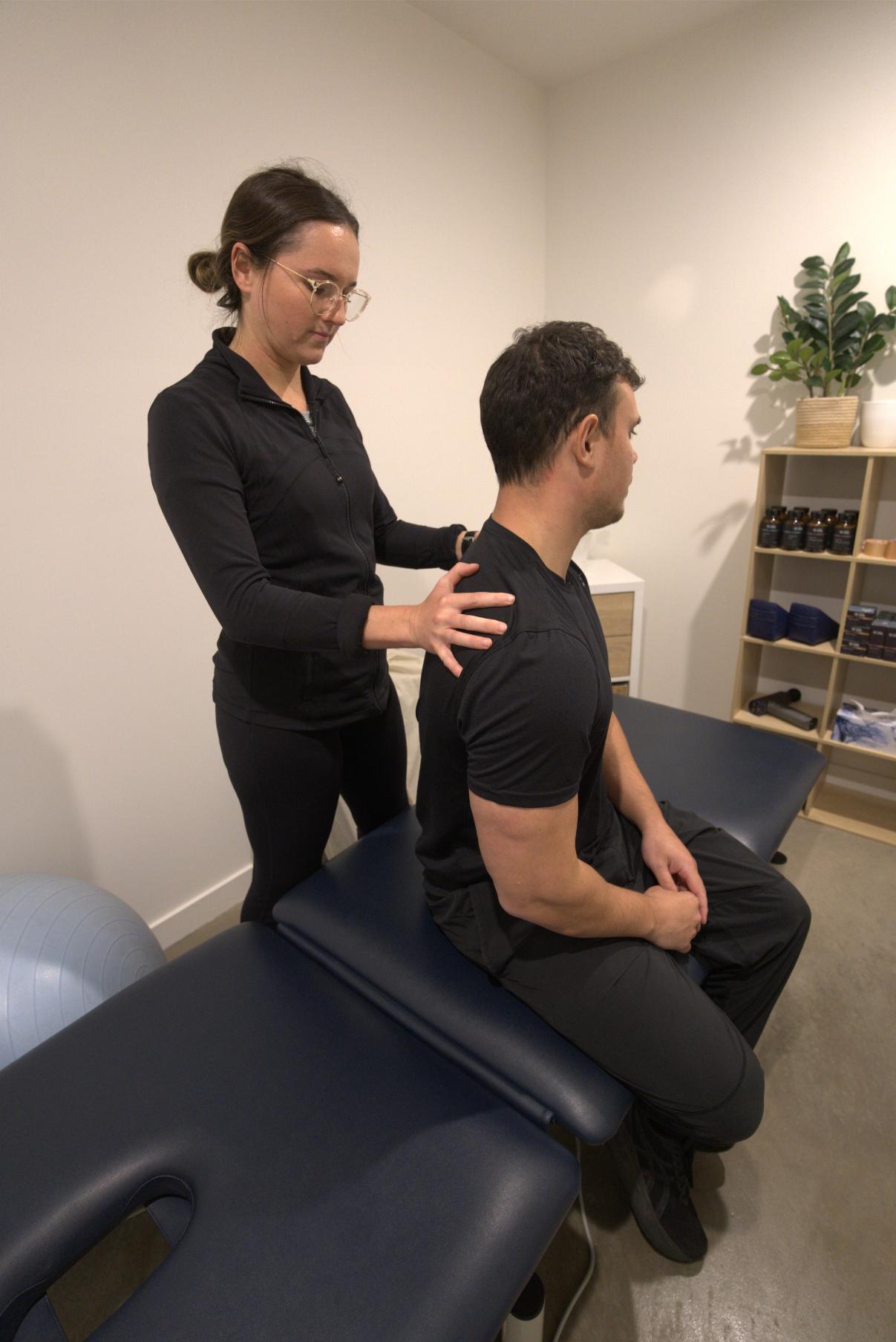
Shoulder pain presents across a wide spectrum from acute sports injuries and overuse conditions to degenerative changes and post-surgical recovery. Understanding exactly what’s driving your pain is the first step to treating it effectively.
For many patients the cause is a strength or stability deficit, the rotator cuff muscles, upper back or scapular stabilisers aren’t doing their job properly, placing excess load on the tendons and joint structures. For others it’s a movement pattern issue, a traumatic injury or the cumulative effect of repetitive overhead activity.
Whatever the cause, the answer is rarely rest alone. Understanding the specific driver of your shoulder pain is what allows us to treat it properly and build the strength around it that means it doesn’t come back.

Shoulder pain symptoms vary depending on the underlying cause but common signs that it’s time to seek treatment include:
If any of these sound familiar, particularly if they’ve been present for more than a few days or keep returning don’t wait. Shoulder conditions that are left untreated have a tendency to worsen and become significantly harder to rehabilitate.

Rotator cuff injuries are among the most common shoulder conditions we treat and among the most mismanaged.
The rotator cuff is a group of four muscles and their tendons that wrap around the shoulder joint, providing the stability and control that allows the arm to move. When these tendons become inflamed, torn or weakened, the result is pain, often with overhead movement, reaching behind the back, or lying on the affected side at night.
Physiotherapy is highly effective for most rotator cuff presentations. At Peak Motion, we combine manual therapy to reduce pain and restore movement with a progressive strengthening program that rebuilds the capacity of the rotator cuff to handle load. For patients who have undergone surgical repair, we manage the full post-operative rehabilitation process from early range of motion work through to return to full function.

If your shoulder pain has lasted more than a few days, limits your ability to lift your arm or interferes with sleep or daily activities, don’t wait. Early treatment prevents short-term pain from becoming a long-term problem.
Yes for most rotator cuff presentations, physiotherapy is the first and most effective line of treatment. A progressive rehabilitation program can restore strength and function, often avoiding the need for surgery. For post-surgical cases, physiotherapy is essential to full recovery.
Yes. Frozen shoulder responds well to physiotherapy, particularly in the early and middle stages. Manual therapy and targeted mobility work can significantly reduce pain and restore range of motion.
Sharp pain when lifting the arm overhead, weakness or a pinching sensation during certain movements. If left untreated it can worsen significantly, physiotherapy corrects the movement patterns and builds the rotator cuff strength that resolves it.
Your session begins with a full assessment to identify the root cause of your pain. Treatment may include manual therapy, joint mobilisation, postural correction and a guided strengthening program built around your specific presentation and goals.
No. You can book directly with us at any time. If your GP refers you under a Chronic Disease Management plan, you may be eligible for Medicare rebates.
We’d love to help you feel better! Give us a call or book your appointment online